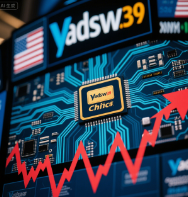
U.S. chip stocks plunge: high-valuation narrative cools, semiconductor sector enters a re-rating phase
Keywords: U.S. stocks, chip stocks, semiconductors, AI supply chain, valuation reset, market volatility
Recently, U.S. chip stocks have fallen sharply across the board, becoming a focal point for global markets. As one of the most heavily bid sectors over the past year, semiconductors and the AI chip supply chain had risen steadily on the back of strong earnings expectations and the story of a technological revolution. But as sentiment weakens, rate expectations shift, and some companies issue softer guidance, chip stocks are correcting noticeably. This move reflects not only a repricing of high-valuation assets, but also a market shift from storytelling to delivery.
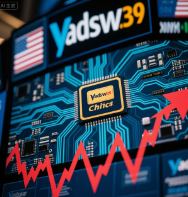
1. Why chip stocks suddenly came under pressure
The selloff in U.S. chip stocks was not triggered by a single factor, but by several pressures at once. The most immediate catalyst came from earnings and guidance disruptions. Over the past few quarters, the market has held very high expectations for AI servers, advanced nodes, HBM memory, and high-end GPUs. When some companies failed to keep beating those expectations in earnings growth and outlook, share prices quickly reflected the risk of disappointment.
Second, changes in rate expectations have weighed on high-valuation tech names. Chip stocks, especially AI-related names, often trade at a premium, and their prices are built largely on growth assumptions several years ahead. If investors rethink the Federal Reserve's pace of cuts, or if long-term yields stay elevated, the higher discount rate lowers the present value of future cash flows and compresses valuations.
Third, sector crowding has amplified the decline. Earlier, a large amount of capital flowed into a small number of leaders, creating a crowded trade. When risk appetite fades, funds and short-term money often exit the most liquid, best-performing names first, which magnifies the pullback in chip stocks.
2. The AI boom is still alive, but the market is getting more rational
It is important to note that the drop in chip stocks does not mean the AI trend has reversed. On the contrary, AI remains the core engine of semiconductor growth in the long run. Whether it is large-model training, inference deployment, edge computing, smart vehicles, or industrial automation, all of these depend on compute, memory, and advanced packaging capabilities.
But the market is shifting from limitless imagination to profit validation. In the past, investors focused more on order size, capex, and technology leadership. Now the market is asking a more practical question: when will those investments turn into sustainable profits? If companies expand too quickly, demand falls short of expectations, or competition drives prices lower, margins can come under pressure.
That is the key issue in this correction: the sector's main conflict has moved from “is there demand?” to “can demand be sustained, and who will actually make money?”
3. External conditions and policy factors also matter
Beyond fundamentals and valuations, geopolitics and policy are continuing to affect U.S. chip stocks. U.S. restrictions on advanced chip exports, tighter oversight of key technologies, and the long-term uncertainty around global supply-chain restructuring all make the operating environment more complex. For chip companies with heavy exposure to global markets, even marginal policy changes can affect revenue mix, customer expansion, and capex plans.
At the same time, global end-market demand has not fully recovered. Consumer electronics, PCs, and parts of the smartphone market are still in only a mild recovery phase. Compared with the strong demand for AI servers, traditional end-demand remains relatively limited. This means the semiconductor industry is not enjoying a broad-based boom; instead, it is showing clear structural divergence, with AI-related chips strong and legacy businesses recovering slowly.
4. Investment logic is shifting from high beta to high certainty
After the decline in chip stocks, the investment case for semiconductors is changing. Previously, investors were more willing to chase high-beta growth names and accept higher volatility and valuation premiums. Now, with macro uncertainty rising, capital is favoring companies with strong earnings delivery, stable cash flow, and clear profit paths.
This means semiconductor performance may no longer be a broad-based rally, but a highly differentiated one. Leading firms with technical barriers, sticky customers, and secure supply-chain positions may still regain market support after the correction. Companies that rely mostly on hype and weak earnings delivery, however, may face a longer period of multiple compression.
From an industry perspective, advanced nodes, AI accelerator chips, memory chips, advanced packaging, and high-speed interconnects remain the most important long-term themes. But investors need to focus more on supply-chain position, order visibility, and return on capital spending, rather than simply betting on a macro story of sector prosperity.
5. Short-term volatility does not change the long-term trend, but risk management matters more
For the market, the selloff in chip stocks is a classic rebalancing of high-valuation assets. It reminds investors that even the most promising sectors need earnings and cash flow support, and even the strongest industry trend cannot escape valuation constraints. In the near term, semiconductors may still be driven by rate expectations, earnings season, and sector rotation, so volatility may take time to settle.
But over a longer horizon, semiconductors remain the backbone of technological innovation. AI, cloud computing, autonomous driving, robotics, and edge intelligence will all continue to drive chip demand. The real question is not whether the industry has a future, but which companies can stand out in the next round of competition and turn technical advantages into durable profitability.
Conclusion
The plunge in U.S. chip stocks is the result of the market re-pricing a high-valuation, high-expectation sector, and it is also a sign that capital markets are moving from sentiment-driven trading toward fundamentals-based validation. The AI wave is not over, but the investment logic has changed: the next winners will not necessarily be the companies with the loudest stories, but the ones best able to deliver orders, profits, and cash flow. For investors, the priority now is to stay rational, pay attention to long-term sector trends, and remain alert to system-wide volatility caused by short-term valuation compression. The semiconductor era continues, but the market is now using stricter standards to identify the true leaders.