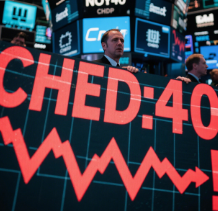
U.S. futures fall across the board, with market sentiment turning cautious as risk appetite fades
Keywords: U.S. stock index futures, Dow Jones, S&P 500, Nasdaq 100, risk appetite, market sentiment, macro outlook, tech stocks
Introduction
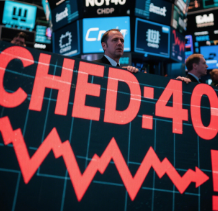
At the start of the week, U.S. stock index futures fell across the board, showing that investors are clearly turning more cautious in the new trading session. Data shows Dow futures fell 1.00%, S&P 500 futures fell 1.18%, and Nasdaq 100 futures dropped even more, by 1.55%. This not only reflects a cooler tone in premarket trading, but also suggests that the market is assigning a higher price to short-term risk.
Historically, stock index futures are an important window into sentiment before the U.S. market opens. When futures weaken together, it usually means the market is reassessing a mix of macro data, rate outlook, earnings, and geopolitics. In particular, with high-valuation sectors making up a large share of the market, the biggest drop in Nasdaq 100 futures often means pressure is strongest on tech and growth stocks.
1. All three major futures markets pulled back, sending a cautious signal
The simultaneous decline in Dow futures, S&P 500 futures, and Nasdaq 100 futures shows that this is not a localized move in one sector, but a broader pullback in risk appetite. The Dow is more tilted toward traditional industries and value stocks, the S&P 500 reflects the broad market, and the Nasdaq 100 captures the pricing mood for tech and high-growth assets. All three falling together indicates that concern about overall valuation and earnings has increased.
Among them, the Nasdaq 100 futures posted the largest drop, showing that investors are becoming more sensitive to long-duration assets. Growth-oriented tech companies usually depend more heavily on the present value of future cash flows, so if the market becomes concerned about rates, earnings delivery speed, or industry competition, those assets tend to be hit first. By contrast, the smaller decline in the Dow suggests some defensive and traditional names may still have near-term support.
2. Behind the premarket weakness, the market is repricing multiple variables
Short-term moves in U.S. futures are rarely isolated events; they usually reflect several factors at once. First, macro uncertainty remains a major drag on risk assets. If inflation proves stickier than expected and jobs data remain resilient, the market may delay hopes for rate cuts. On the other hand, if growth starts to soften, investors worry about earnings momentum. This tug-of-war between growth and rates often creates sharp futures swings at key moments.
Second, earnings expectations remain central. U.S. valuations are still relatively high overall, especially for mega-cap tech and AI-related names, which have already rallied strongly. The market now demands more from earnings delivery. If results, guidance, or capex timing miss expectations, positions can be quickly adjusted, dragging futures lower.
Third, market sentiment itself can magnify the move. In a highly interconnected global pricing environment, weakness in U.S. premarket trading often spills over into other risk assets, including the dollar, Treasury yields, and commodities. Investors frequently move defensively before the open, trimming exposure to high-volatility positions, which intensifies selling pressure in futures.
3. Tech is under pressure, and growth styles are being rebalanced
The leading decline in Nasdaq 100 futures shows that growth styles are under heavier pressure at this stage. Over the past period, AI, semiconductors, and major internet platforms have been key drivers of U.S. equity gains, but these assets are extremely sensitive to liquidity and expectations. If the market revises its view on the pace of cuts, capital efficiency, or industry competition, money can leave high-valuation names quickly.
From a portfolio perspective, this correction does not necessarily mean the long-term trend has reversed, but it does show the market is moving from one-sided growth chasing toward more balanced allocation. Investors are paying more attention to earnings quality, cash flow stability, and valuation margins of safety, rather than relying purely on narrative or sentiment. For institutional money, this is also a chance to rethink portfolio structure: whether to keep betting on high-beta tech or shift into more defensive sectors such as healthcare, utilities, and financials.
4. Three key variables will shape whether this is a brief pullback or a larger phase
Going forward, the key drivers of U.S. futures will still come down to three variables. First, whether macro data continues to confirm economic resilience. If data stays stable, the market may return to a soft-landing trade; if it weakens, risk appetite could contract further. Second, whether the policy path becomes clearer. Rate expectations are the main anchor for U.S. equity valuations, and any change in inflation, employment, or monetary policy will feed directly into futures pricing. Third, how the earnings season unfolds overall. If large-cap leaders continue to deliver profit growth, the current pullback may only be a technical consolidation. If misses spread across more sectors, the correction could last longer.
So while today's weaker futures send a cautious signal, they do not necessarily imply a trend reversal. A more reasonable reading is that the market is rebalancing after running at elevated levels. Capital is being redistributed, valuations are looking for support again, and investors are waiting for a clearer catalyst.
Closing
In short, the broad decline in U.S. stock futures reflects a short-term cooling in sentiment and a pullback in risk appetite. Nasdaq 100 futures fell the most, showing that tech and growth remain the main source of volatility. For the next phase, macro data, policy expectations, and corporate earnings will together shape the market direction.
When uncertainty rises, blindly chasing gains is not a sound strategy. What matters more is a full view of valuation, earnings, and liquidity, and a focus on structural opportunities rather than simply index moves. For global markets, the current volatility is both a stress test and a re-pricing process. Those who adapt first to the new rate environment and earnings logic are more likely to take the lead in the next market rotation.